
Introduction to Wind Turbines and Wind-Solar Hybrid Power Systems
Introduction to Wind Turbines and Wind-Solar Hybrid Power Systems
Keywords: Small and Medium-Sized Wind Turbines, Wind Turbines, Off-Grid Wind Turbines, On-Grid Wind Turbines
This The text focuses solely on introducing small- and medium-sized wind turbines.
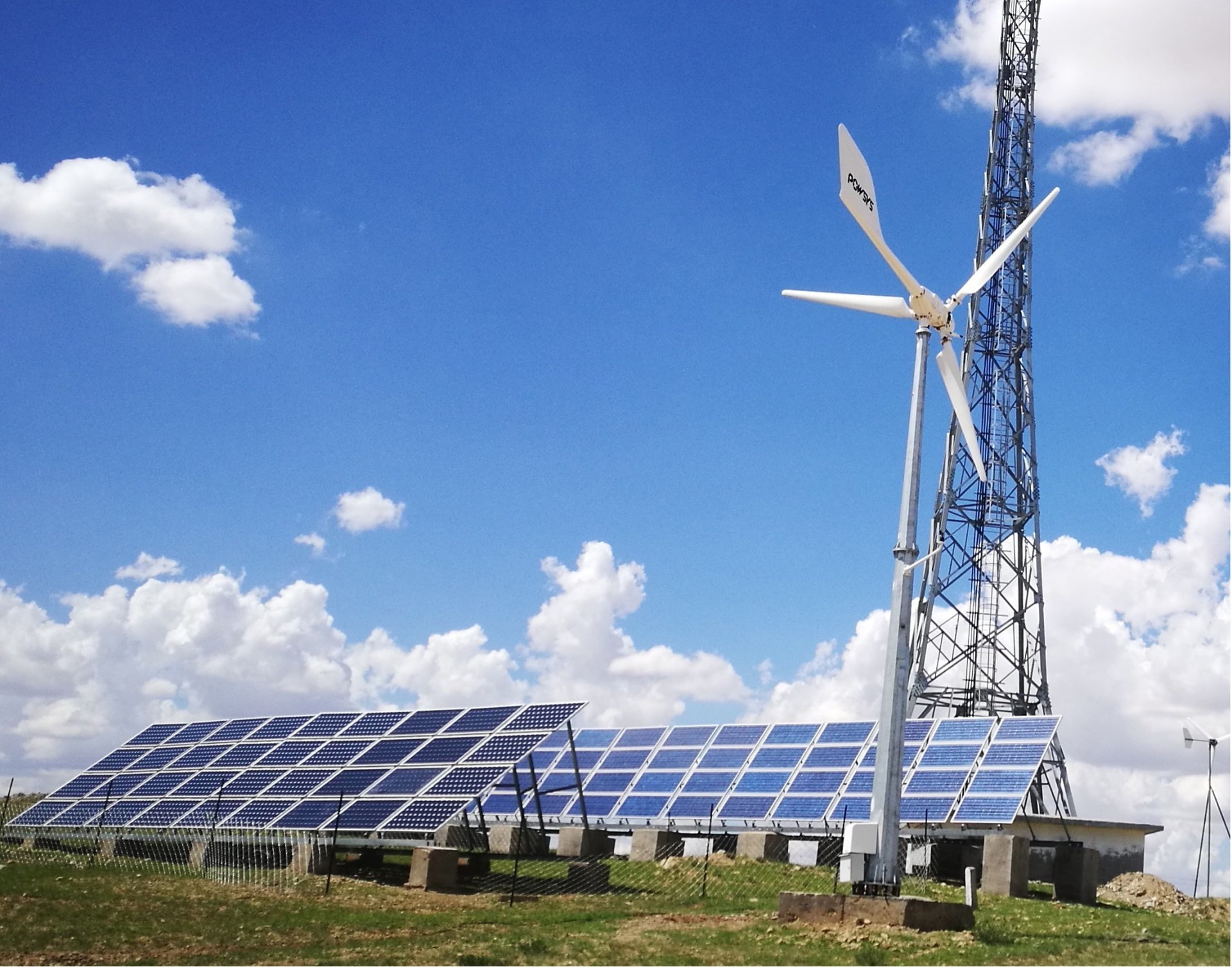
Wind turbines typically consist of a rotor (blades), a generator, a yaw mechanism (such as a tail fin), a braking system, and a tower (tower mast), among other components. Wind turbines are classified into horizontal-axis wind turbines and vertical-axis wind turbines, depending on the orientation of the rotor shaft.
Horizontal-axis wind turbine : The rotor of a horizontal-axis wind turbine rotates around a horizontal axis, with the rotor shaft aligned parallel to the wind direction. The blades on the rotor are mounted radially—perpendicular to the rotation axis—and positioned at an angle (known as the pitch angle) relative to the rotor's plane of rotation. The number of rotor blades is 1 to 10 Episode (mostly 3 Piece, 5 Piece, 6 (The blade) achieves high wind energy utilization at high speeds but requires relatively high wind speeds to start up.
Vertical-axis wind turbine : The rotor of a vertical-axis wind turbine rotates around a vertical axis, with the rotor shaft perpendicular to the wind direction. Its advantage is that it can capture wind from any direction—meaning no need to reorient the turbine when the wind changes.
Wind turbines and photovoltaic modules can be complementarily designed into a wind-solar hybrid power system, which consists of key components such as a wind turbine, solar panels, a solar controller, a wind turbine controller, an inverter, and energy-storage batteries.
The wind-solar hybrid power system can generate and supply electricity around the clock, with batteries providing additional power when generation falls short. It can meet the energy demands of various types of loads.
The small-scale distributed wind power grid-connected system consists of a wind turbine and a grid-tied inverter, primarily designed for self-consumption with surplus electricity fed into the grid. It prioritizes supplying power directly to on-site users, while any shortfall is automatically supplemented by the grid. Any excess energy generated is then sent back to the national power grid.
Hepuyu New Energy - With over a decade of expertise in photovoltaic and wind power application technologies, we can provide solar energy off-grid solutions. / Grid integration design solutions, wind-solar complementary power supply designs, small-scale wind turbine grid-connected designs, and customized product development services.
Related News

Add: No. 22 Tengren Road, Shunyi District, Beijing
Email: info@bjhpy.com
Consultation Hotline:
86-010-60480298

Follow us
Contact:
Email:
Tel:
WeChat:
在线客服添加返回顶部
右侧在线客服样式 1,2,3 1
图片alt标题设置: Helpyou New Energy
表单验证提示文本: Content cannot be empty!
循环体没有内容时: Sorry,no matching items were found.
CSS / JS 文件放置地