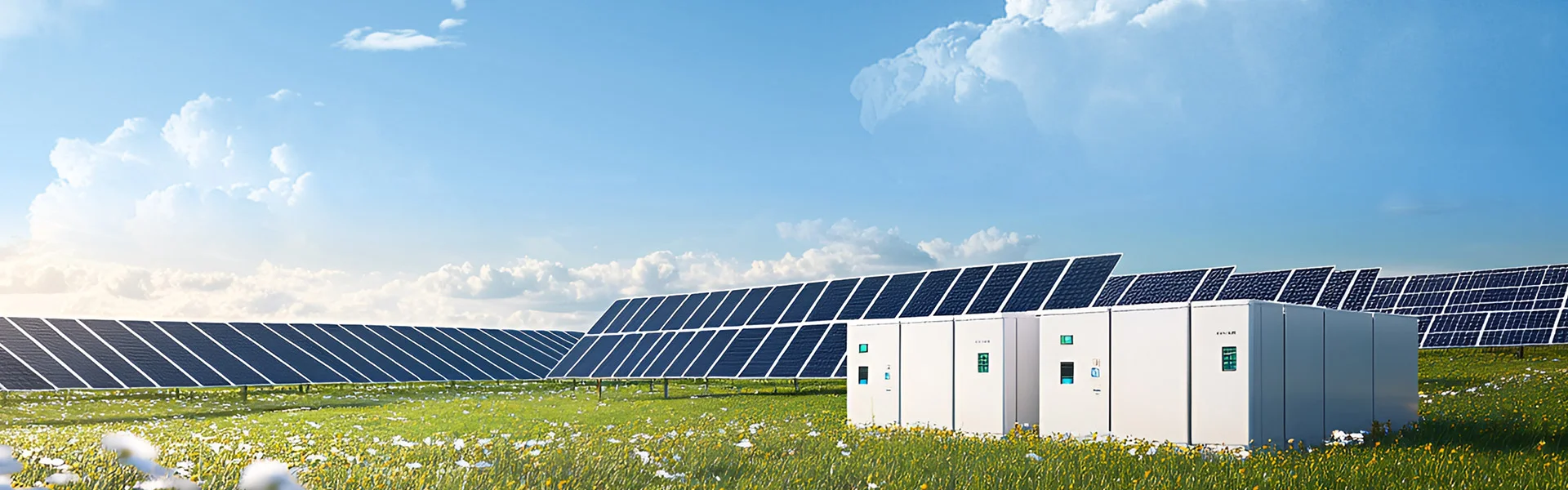
Applications of solar/wind power generation in the 5G and IoT era
Solar energy /The Application of Wind Power Generation in the 5G and IoT Era
The concept of the Internet of Things was introduced by Kevin Ashton, the "father of the IoT" and Executive Director at MIT, first introduced the concept in 1998, highlighting how embedding RFID technology—and other sensor-based systems—into everyday objects could give rise to an Internet of Things. Just one year later, Kevin Ashton spearheaded the establishment of the Auto-ID Center, which provided a clearer vision for IoT applications: by leveraging global RFID tags to wirelessly connect objects to the internet, millions of items—from razors and euro banknotes to car tires—could be continuously tracked and audited. (RFID technology, or Radio-Frequency Identification, is a communication method that uses radio signals to identify specific targets and read/write associated data, all without requiring physical or optical contact between the identification system and the object. In fact, we encounter RFID technology almost daily—in applications like access control systems, libraries, and food safety traceability initiatives.)
The 5G era is a fully mobile and fully connected intelligent age, where people need to connect and communicate with each other, as well as with objects—both human-to-human, human-to-thing, and thing-to-thing interactions are essential. By 2025, the global number of connections is expected to surpass 100 billion.
5G technology provides the technological foundation for the growth of the Internet of Things, and over the next decade, mobile internet, artificial intelligence, connected vehicles, and IoT will experience rapid advancements. 5G technology will significantly accelerate the development of the IoT.
5G deployment has advanced significantly compared to the past in terms of network architecture, product forms, and performance specifications. 4G The network is noticeably different, for example: 5G devices consume 2 to 4 times more power than 4G devices, posing unprecedented challenges to site infrastructure development. This calls for systematic research and the development of innovative 5G energy solutions to address the unique energy demands brought about by 5G technology. At the same time, efforts to reduce energy consumption and emissions face significant hurdles.
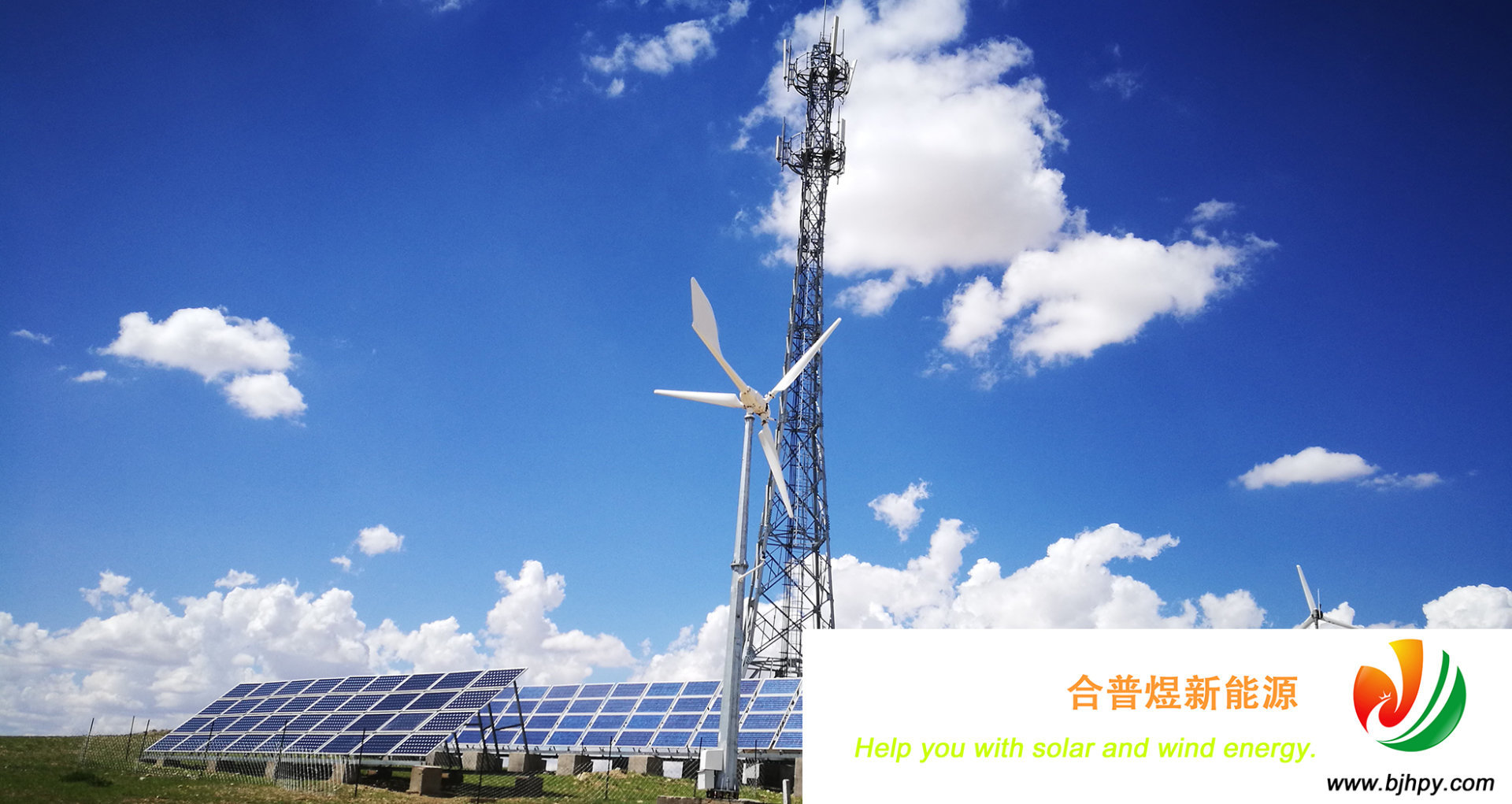
Solar and wind power are the easiest forms of new energy to harness, as In the era of 5G and the Internet of Things, these technologies will play an increasingly significant role.
Depending on the region and application, as well as the existing power supply method of the base station, you can choose either off-grid solar or wind-solar hybrid power generation, or opt for a grid-tied energy storage system that works in tandem with the utility grid.
Solar energy The grid-connected energy storage system prioritizes clean energy sources—such as solar or wind power. When clean energy supply is insufficient, the utility grid and stored energy automatically step in to make up the shortfall. This approach not only reduces emissions and saves energy but also helps flatten peak demand and fill valleys, thereby minimizing the impact on the power grid.
Hepuyu New Energy www.bjhpy.com is a national high-tech enterprise specializing in solar and wind power applications, with a core focus on charge/discharge controllers and inverter technology. We provide high-quality solutions tailored to meet the needs of customers across various industries.


Add: No. 22 Tengren Road, Shunyi District, Beijing
Email: info@bjhpy.com
Consultation Hotline:
86-010-60480298

Follow us
Contact:
Email:
Tel:
WeChat:
在线客服添加返回顶部
右侧在线客服样式 1,2,3 1
图片alt标题设置: Helpyou New Energy
表单验证提示文本: Content cannot be empty!
循环体没有内容时: Sorry,no matching items were found.
CSS / JS 文件放置地